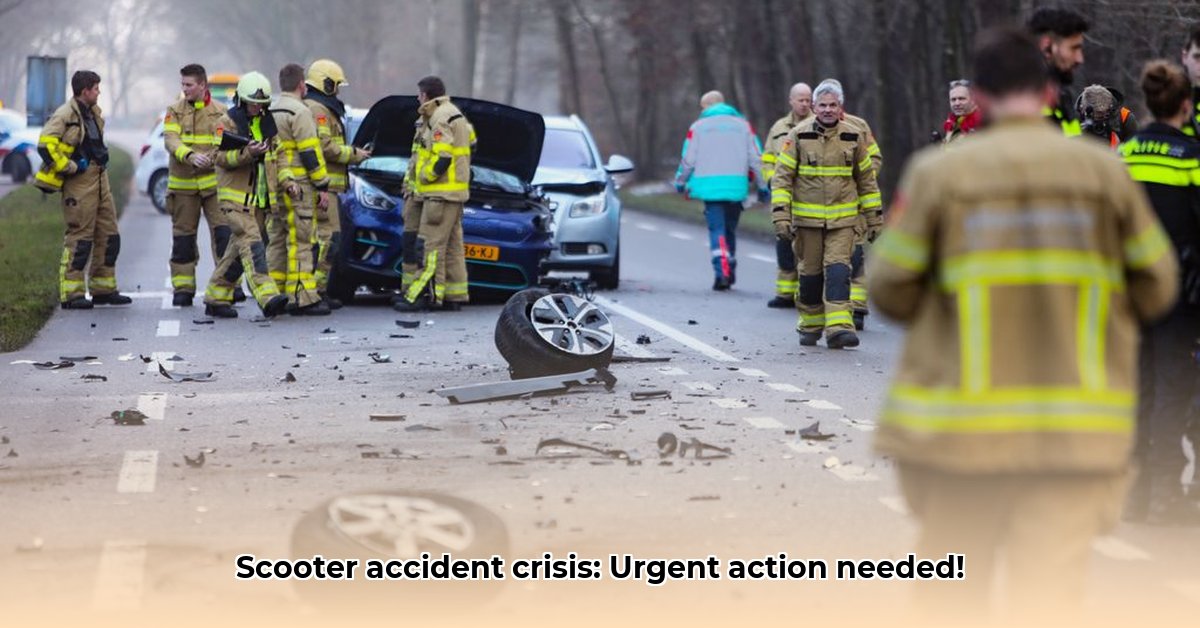
Meteren's Scooter Accident Surge: A Call for Action
Recent weeks have seen a concerning rise in scooter accidents in Meteren, raising serious concerns about road safety. While precise figures remain elusive, the number of incidents, including several requiring emergency helicopter assistance, highlights a critical need for immediate action. This article examines the available data, identifies key problem areas, and proposes a multi-pronged approach to mitigate this growing crisis. It’s crucial to acknowledge that the current lack of comprehensive data limits the scope of definitive conclusions, but what information is available demands urgent attention.
The Data Deficit: A Barrier to Effective Solutions
Currently, detailed information on the extent and nature of Meteren’s scooter accidents is lacking. This absence of crucial data – including accident locations, times, contributing factors, and emergency response times – hampers efforts to develop effective solutions. How many accidents have actually occurred? Where are the most dangerous areas? Does poor lighting, inadequate road markings, or reckless rider behaviour play a significant role? These questions remain unanswered without a dedicated data collection and analysis initiative. This data gap is the first obstacle to overcome. Is it reasonable to expect such a significant increase in accidents without a concerted effort to understand the underlying causes?
A Framework for Safer Streets: Three Key Pillars
Addressing Meteren's scooter accident crisis requires a coordinated strategy focusing on data collection, targeted interventions, and ongoing monitoring. This involves three interconnected pillars:
- Comprehensive Data Collection: Immediate implementation of a robust system to systematically record every scooter accident, including location, time, contributing factors (weather, road conditions, rider behaviour), and emergency response times.
- Targeted Interventions Based on Data: Once collected, the data must be carefully analysed to identify accident hotspots and contributing factors. This analysis will inform the development of targeted solutions, such as improved road infrastructure (lighting, signage, dedicated scooter lanes), public awareness campaigns promoting safe riding practices (helmet use, defensive driving), and enhanced emergency response protocols.
- Ongoing Monitoring and Evaluation: The effectiveness of implemented solutions must be continuously tracked and evaluated. Regular data analysis will allow for adjustments and refinements to ensure maximum impact and long-term effectiveness. This iterative approach ensures adaptation to evolving circumstances.
Actionable Steps: A Phased Approach
To effectively address this urgent situation, a phased approach is needed:
Establish a comprehensive accident reporting system: This involves partnering with local authorities, emergency services, and possibly even scooter rental companies to create a coordinated data collection mechanism. (Efficacy metric: Aim for 95% reporting rate within six months.)
Conduct a thorough analysis of existing data: Once sufficient data is available, identify accident hotspots, common contributing factors (e.g., time of day, weather conditions, specific locations), and deficiencies in emergency response. (Efficacy metric: Identify at least three key areas for improvement within three months.)
Implement targeted interventions: Based on the data analysis, implement tailored solutions—improving infrastructure (streetlights, road markings, dedicated scooter lanes), launching a public awareness campaign on safe riding practices (helmet use, defensive driving techniques), and enhancing emergency response times and procedures. (Efficacy metric: Aim for a 15% reduction in accidents within one year.)
Regularly monitor and evaluate effectiveness: Continuously track accident rates and analyse the collected data to assess the impact of implemented interventions. Adjust strategies based on ongoing evaluation to ensure continuous improvement. (Efficacy metric: Conduct quarterly evaluations and adjust strategies accordingly.)
Stakeholder Collaboration: A Shared Responsibility
Addressing Meteren’s scooter accident problem requires a collective effort. Professor Pieter van der Merwe, Transport Engineering, Stellenbosch University, emphasizes the need for a shared responsibility: "This isn't solely a municipal issue; it requires cooperation from riders, emergency services, and scooter rental companies. Effective solutions need to be collaborative, data-driven, and adaptable.”
The table below outlines the key responsibilities of various stakeholders:
| Stakeholder | Key Responsibilities |
|---|---|
| Municipality | Road infrastructure improvements, traffic law enforcement, public awareness campaigns. |
| Emergency Services | Optimizing response times, specialized training for scooter accident response. |
| Scooter Riders | Adhering to traffic laws, wearing protective gear, responsible riding practices. |
| Scooter Rental Companies | Implementing safety training, maintaining scooters in good condition. |
| Insurance Companies | Developing specialized scooter insurance, promoting safe riding. |
The Road Ahead: Building a Safer Future
The recent surge in scooter accidents in Meteren constitutes a serious road safety challenge. By prioritizing data-driven decision-making, implementing targeted interventions, and fostering strong collaboration between stakeholders, we can work towards a more secure and sustainable transportation environment. The immediate focus must be on building a comprehensive data collection system, followed by rapid implementation of evidence-based solutions. Let’s pledge to turn "Ongeluk Meteren" into a statistic of the past, achieved through a concerted effort to make our streets safer for everyone.